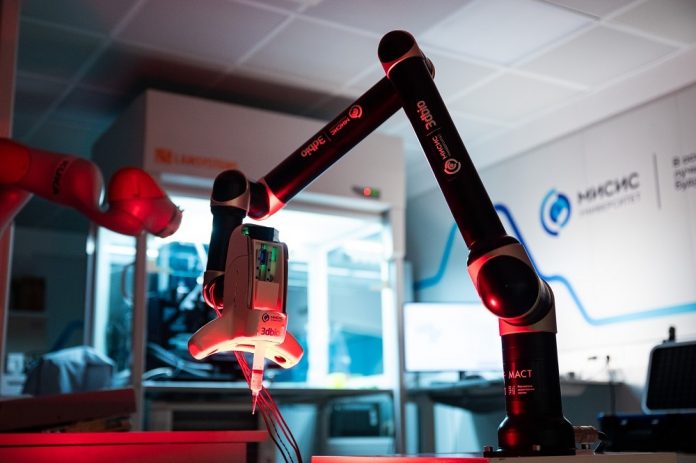
Russia has officially adopted the first national standard regulating the 3D bioprinting of tissue and organ equivalents. The document, designated GOST R 72595–2026 “Three-dimensional bioprinting of tissue and organ equivalents. Basic principles. Terms and definitions,” was approved by a Rosstandart order and will come into effect on September 1, 2026. The standard was developed by scientists from NUST MISIS in close cooperation with experts from the Technological Platform BioTech2030 Association and the 3D Bioprinting Solutions laboratory.
From Isolated Projects to a Systemic Industry
Prior to the introduction of this document, the development of 3D bioprinting in the country occurred primarily within isolated scientific projects and individual research teams. The new GOST is designed to systematize this complex and rapidly growing biomedical field by establishing common terminology, unified basic principles, and a regulatory framework for applied work.
Experts note that standardization is absolutely necessary to create safe tissue equivalents for regenerative medicine, test new drugs, and develop personalized solutions for patients.
Academic Community Assessment
Alevtina Chernikova, Rector of NUST MISIS, emphasized the high significance of the event for the entire industry and noted the university’s leadership position in this area:
“The approval of the national standard is an important stage in the formation of bioprinting as a full-fledged industry in Russia. The development of GOST R 72595–2026 was made possible by the active work of the Health Engineering consortium, formed at NUST MISIS under the strategic academic leadership program Priority 2030.
In close partnership with the industry, our team of scientists led by the Director of the Institute of Biomedical Engineering, Ph.D. in Physics and Mathematics Fedor Senatov, is conducting breakthrough research. It was at our university that a 3D bioprinter was created, which was used in December 2023 to perform the world’s first surgery with in situ bioprinting. And in October 2025, an innovative cartilage bioprinting method developed by our researchers was applied in practice for the first time.”
— Alevtina Chernikova, Rector of NUST MISIS
Business Perspective: Creating an “Infrastructure of Trust”
Biotech business representatives are confident that standardization is the primary key to the commercialization and scaling of scientific achievements. Yusef Khesuani, Managing Partner at 3D Bioprinting Solutions, commented on the document’s approval:
“Until now, the development of three-dimensional bioprinting in the country occurred mainly within the framework of individual research projects. The emergence of a national standard elevates this field to a systemic level — with uniform requirements, terminology, and approaches necessary to scale technologies and introduce them into clinical practice.”
— Yusef Khesuani, Managing Partner at 3D Bioprinting Solutions
The expert specifically emphasized that such standards create an “infrastructure of trust” in the market by codifying knowledge and ensuring the compatibility of approaches. Without establishing such common rules of the game and quality control methods, serious implementation of new medical technologies is simply impossible.
International Context and Regulatory Trust
Global trends were also taken into account when developing the Russian GOST. Alexey Fedorov, Director of the Federal Research Centre of Biotechnology of the Russian Academy of Sciences and official Russian representative to the ISO/TC 276 “Biotechnology” technical committee, pointed out that bioprinting standardization is currently a pressing challenge for the global scientific community:
“The topic of bioprinting is actively discussed on the global agenda; in particular, the relevant ISO technical committee is actively working on standardization in the field of organoids. The development of standards for terminology, quality control systems, and application guidelines in this area helps increase the trust of regulatory authorities and consumers in new technologies.”
— Alexey Fedorov, Director of the Federal Research Centre of Biotechnology RAS
It is expected that the emergence of a solid domestic regulatory base will not only accelerate the transfer of advanced technologies from research laboratories directly to clinical practice but will also open fundamentally new opportunities for effective cooperation between science, industry, and medicine. Ultimately, this will significantly strengthen Russia’s position in the global agenda for the development of modern biomedical technologies.