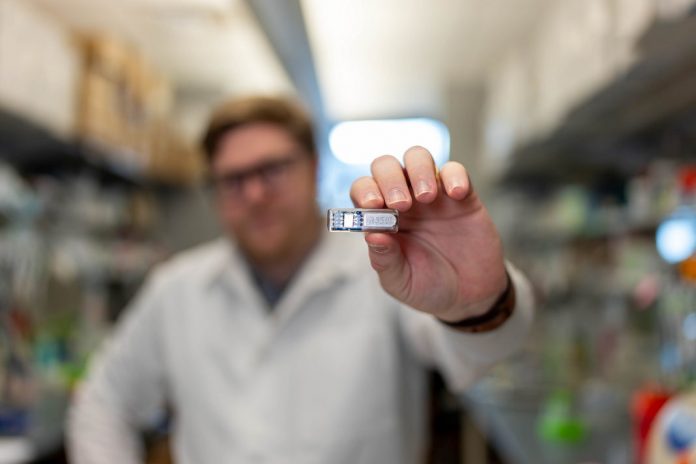
The HOBIT Device: Solving the Problem of Oxygen Starvation
The new development is called HOBIT (Hybrid Oxygenation Bioelectronic System for Implantable Therapy). The device, about the size of a folded stick of chewing gum, integrates engineered cells and oxygen-producing bioelectronics.
Until now, the main obstacle to implementing such cell factories has been oxygen deprivation. When many therapeutic cells were placed inside an implant, they began to compete for oxygen, causing most of them to die, which drastically reduced the effectiveness of the treatment.
The HOBIT system brilliantly solves this problem: a miniature generator built into the implant locally produces oxygen by splitting water molecules, providing the cells with stable nourishment even in an oxygen-poor environment. In addition to the generator and the cell chamber, the device is equipped with electronics and a battery for wireless communication with external devices and regulating oxygen production.
“We are producing oxygen right there where the cells need it. This allows us to support a much higher cell density in a much smaller space. The cell density in HOBIT was about six times higher than with traditional encapsulation methods without oxygenation.”
— Jonathan Rivnay, Professor at Northwestern University
Three Drugs Simultaneously: Successful Trials
The results of the large-scale study were published on March 27, 2026, in the authoritative scientific journal Device (Cell Press).
To demonstrate the platform’s capabilities, scientists programmed cells to simultaneously produce three biological drugs with completely different half-lives:
- Anti-HIV antibody;
- GLP-1-like peptide (used for the treatment of type 2 diabetes);
- Leptin (a hormone that regulates metabolism and appetite).
The implants were placed under the skin of rats, after which the scientists monitored the drug levels in the animals’ bloodstream for 30 days. In rats with oxygenated HOBIT implants, a stable level of all three biologics was maintained throughout the study. By the end of the test period, about 65% of the cells in these devices remained viable.
By comparison, in the control group (animals with implants without oxygen generation), drugs with a short half-life were no longer detectable in the blood by day seven, and molecules with a longer lifespan steadily declined over time. The cell survival rate in such devices was only 20%.
Prospects: The End of the Daily Pill Era?
The developers emphasize that traditional biologics have different half-lives, making it extremely difficult to maintain their stable levels in the body. However, the implanted HOBIT cell factories solve this problem through continuous synthesis.
In the future, “living pharmacies” could radically change the lives of people with chronic diseases: patients will no longer have to carry medications, give regular injections, or remember pill times — a single long-term therapy will suffice.
The research team’s immediate plans include testing the technology on larger animal models and adapting the device to treat specific diseases, including studying therapies based on transplanted pancreatic cells. The development has already received substantial financial support from Breakthrough T1D and the U.S. Department of Defense’s Defense Advanced Research Projects Agency (DARPA).