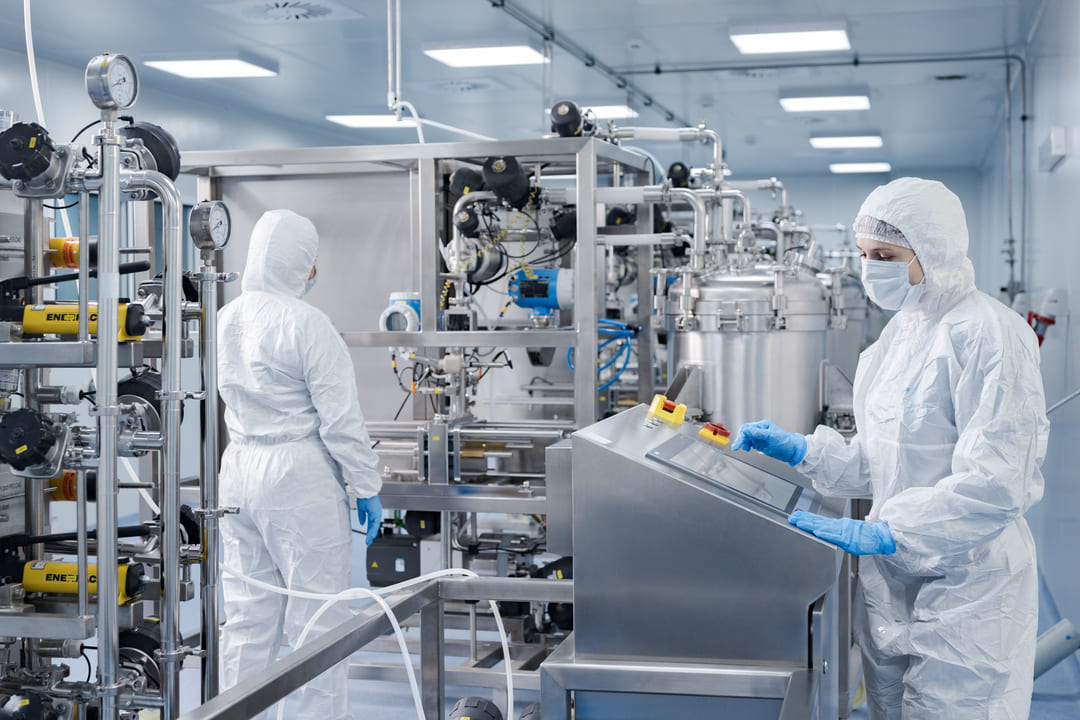
An analysis of the Russian Ministry of Industry and Trade’s register of licenses for the manufacture of medicines as of January 13, 2026, identified 522 licenses. Of these, 501, or approximately 96%, had active status. Moscow, the Moscow Region and St. Petersburg account for the largest share of the licensing base, while pharmaceutical substance manufacturing represents a distinct segment of the market.
522 Medicines Manufacturing Licenses
As of January 13, 2026, the Russian register contained 522 licenses for the manufacture of medicines.
Of these, 501 licenses had active status, while 21 licenses were suspended. Active licenses therefore accounted for approximately 96% of the total.
| Indicator | Number | Share |
|---|---|---|
| Total licenses | 522 | 100% |
| Active licenses | 501 | 96.0% |
| Suspended licenses | 21 | 4.0% |
The register covers licenses with different combinations of manufacturing activities, ranging from the production of finished dosage forms to pharmaceutical substance manufacturing, storage, packaging, quality control and other operations.
Moscow and the Moscow Region Remain the Largest Manufacturing Cluster
The largest number of licenses is associated with companies located in Moscow, the Moscow Region and St. Petersburg.
| Region | Number of licenses | Share |
|---|---|---|
| Moscow | 120 | 23.0% |
| Moscow Region | 53 | approximately 10% |
| St. Petersburg | 37 | approximately 7% |
Together, the three largest regional centers account for approximately 40% of the licenses in the analyzed register.
Other significant regional centers include the Vladimir, Kaluga, Novosibirsk and Sverdlovsk regions, the Republics of Tatarstan and Bashkortostan, and other Russian regions.
The Scope of Licensed Manufacturing Activities
The analysis of licensed activities shows that Russian medicines manufacturers generally hold licenses covering several types of operations.
The licensing base includes a broad range of activities related to the manufacture, storage and distribution of medicines. Individual licenses may additionally cover packaging, labeling, batch release, quality testing, import-related operations and other manufacturing processes.
This structure is particularly characteristic of large manufacturing organizations combining several stages of medicines production and handling under a single license.
Pharmaceutical Substance Manufacturing as a Distinct Segment
Pharmaceutical substance manufacturing represents a separate segment of the licensing base. The register includes chemical synthesis as well as other production methods, together with subsequent operations such as purification, physical processing, storage, packaging and quality control.
References to pharmaceutical substance manufacturing account for approximately 12% of the identified mentions of licensed activities in the analyzed dataset.
The segment includes both specialized pharmaceutical substance manufacturers and companies combining substance production with the manufacture of finished dosage forms.
From New Manufacturing Projects to Expanded Production Capabilities
The structure of the register shows that a medicines manufacturing license increasingly covers a combination of production operations rather than a single activity.
For some manufacturers, one license covers the production of several dosage forms, pharmaceutical substance manufacturing, packaging, quality control, storage and distribution.
At the same time, separate licenses covering pharmaceutical substance manufacturing form a distinct part of Russia’s production base, directly connected with chemical and biotechnological manufacturing.
Key Findings
The January 2026 snapshot of the register contains 522 licenses for the manufacture of medicines, of which 501 are active. Approximately 40% of the licenses are associated with Moscow, the Moscow Region and St. Petersburg.
The licensing base is dominated by comprehensive licenses covering manufacturing and related operations. At the same time, pharmaceutical substance manufacturing represents a distinct segment of the Russian production base.
This January snapshot provides a baseline for the next stage of the analysis. A comparison with the September 2026 register makes it possible to assess changes in the number of licenses, the composition of license holders, the structure of suspensions and the emergence of new manufacturing projects during the first eight months of the year.
All this data is available for independent analysis in our new service — Unified Register of Medicines Manufacturers.
Check the Medicines Manufacturing License
The complete list of licensees with details by type of work is available in our registry.