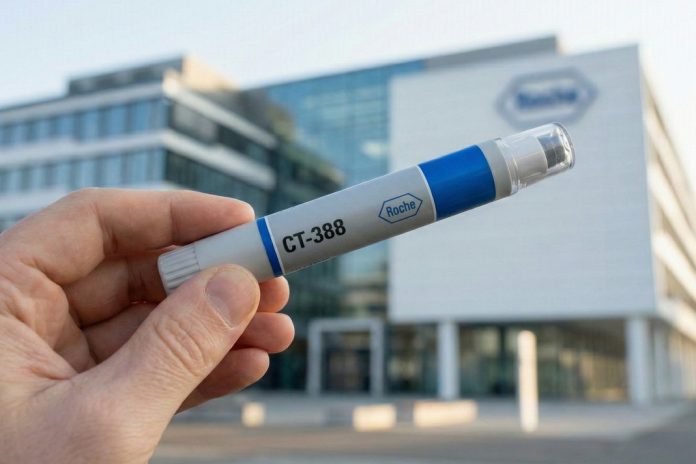
Key Study Results
During the 48-week trial, patients with obesity received weekly subcutaneous injections of CT-388. At the highest dosage tested (24 mg), the following results were recorded:
- 22.5% — placebo-adjusted weight loss among participants who fully adhered to the treatment protocol.
- 18.3% — weight loss considering the entire patient sample (including those who deviated from the treatment plan or discontinued it).
- 54% of participants achieved resolution of obesity: their Body Mass Index (BMI) fell below the threshold of 30 kg/m², corresponding to an exit from the medical category of “obesity” (compared to 13% in the placebo group).
- 73% of patients with pre-diabetes returned to normal blood glucose levels (versus 7.5% in the placebo group).
Levi Garraway, M.D., Ph.D., Roche’s Chief Medical Officer and Head of Global Product Development, commented:
No Weight Loss Plateau
A key feature of the data was the absence of a plateau effect. By the end of week 48, patients’ weight continued to decrease.
Manu Chakravarthy, Roche’s head of development in the cardiovascular, renal, and metabolic fields, noted in an interview with Reuters:
Mechanism of Action and Competition
CT-388 belongs to the class of dual GLP-1/GIP receptor agonists. The molecule simultaneously regulates blood glucose levels and suppresses appetite. In its mechanism of action, the drug is similar to the blockbuster Mounjaro/Zepbound (tirzepatide) from Eli Lilly, which currently dominates the market.
Jefferies analysts note that the presented data puts CT-388 “in the same efficacy ballpark as Zepbound.” This is critical for Roche, which aims to disrupt the duopoly of Novo Nordisk and Eli Lilly in the obesity drug market, a sector that could reach $150 billion by the early 2030s.
Safety Profile and Plans
The drug demonstrated a tolerability profile consistent with the incretin class. The main side effects were gastrointestinal and were characterized as mild to moderate. The discontinuation rate due to adverse events was 5.9% (compared to 1.3% in the placebo group).
The CT-388 molecule entered Roche’s portfolio following the acquisition of Carmot Therapeutics for $2.7 billion in 2023. The launch of the final Phase III clinical trials is scheduled for the current quarter.