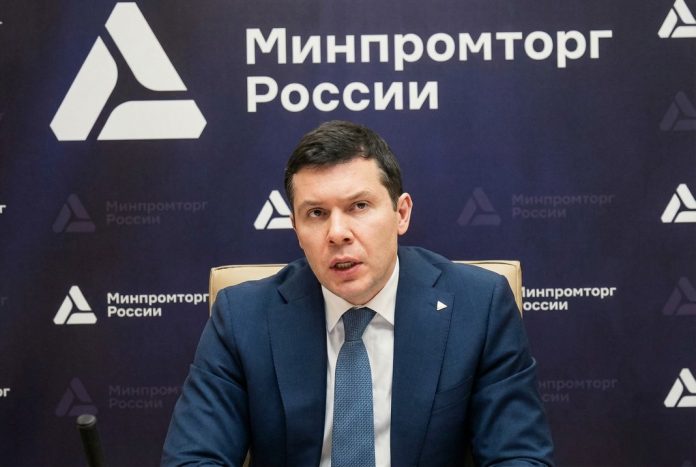
On January 21, 2026, at a meeting between the President of the Russian Federation and government members, the head of the Ministry of Industry and Trade, Anton Alikhanov, presented a report on the state of the pharmaceutical industry. According to the Minister, the stage of forming the industrial base is complete: there are 524 manufacturers operating in the country, securing more than 60% of the commercial market. Now the department announces a paradigm shift — a transition from the generic model to the creation of original “first-in-class” drugs with direct state support for clinical trials.
Industrial Landscape 2026: Facts and Figures
According to Anton Alikhanov, the industry has made a qualitative leap over the past 15 years. More than 80 new production sites have been opened. Current capacities allow Russian pharmaceutical companies to occupy a dominant position in strategically important segments:
- 63% — share of domestic drugs in the open (commercial) market;
- >80% — coverage of the needs of the state healthcare system (public procurement);
- 86% — share of localized drugs from the VED (Vital and Essential Drugs) list.
It is important to note the depth of localization: two-thirds of the drugs from the VED list are produced on a full cycle basis, meaning they use Russian pharmaceutical substances (API).
Strategic Independence: Vaccines and Oncology
The Minister’s report highlighted the immunobiology block separately. For the National Calendar of Preventive Vaccinations (NCPV), Russia produces full-cycle vaccines against 11 out of 12 pathogens. In the calendar for epidemic indications, the domestic industry covers the prevention of 21 out of 24 infections.
The Kirov Region Case
With the support of the Industrial Development Fund (IDF), the company Nanolec is implementing a large-scale project in the Kirov region. In October 2025, the first stage of production for a vaccine against the human papillomavirus (HPV) was launched. Immediate plans include expanding the site to produce vaccines against meningococcal infection and chickenpox.
Targeted Therapy
In the oncology segment, Russian manufacturers cover more than 80% of the Ministry of Health’s needs, including high-tech drugs based on monoclonal antibodies. The Minister specifically noted the success of BIOCAD, which brought to market the world’s first drug for the treatment of Bekhterev’s disease, developed jointly with scientists from Pirogov Russian National Research Medical University.
Growth Points: Blood, Psychiatry, and Radiopharma
The Ministry of Industry and Trade outlined sectors where new capacities are expected to launch in the coming years:
- Blood Products: By late 2026 — early 2027, new plants will become operational in Moscow, Perm, Nizhny Novgorod, Tomsk, Ufa, and the Ryazan region.
- Psychiatry: In 2025, production technologies for three invasive drugs were mastered. Two of them will be produced under an offset contract with Moscow.
- Radiopharmaceuticals: An import substitution level of 97.5% has been reached. Achieving the 100% indicator is expected in 2026.
“The industrial base in the industry has largely been formed. By 2030, the construction of at least 10 more new production facilities is planned. But now we consider it important to focus on the transition from an extensive to an innovative model of industry development.”
— Anton Alikhanov, Minister of Industry and Trade of the Russian Federation
New Innovation Support Mechanism
A key problem for the industry remains the reduction in the volume of clinical trials (CT) following the departure of Western pharmaceutical giants. To avoid becoming hostages to the “generic model,” the Ministry of Industry and Trade, together with the Ministry of Health and the Ministry of Finance, has developed a revolutionary support measure.
This involves direct compensation for actual costs of clinical trials if they resulted in the creation of a drug that is:
- Unique to global practice (first-in-class);
- Or superior to existing treatment methods (best-in-class).
Work on the regulatory framework will be completed in the first half of 2026. The first selection of projects is planned to be held this year so that the industry can receive funding in 2027.
Development Zones
Despite the successes, Anton Alikhanov acknowledged difficulties in the segments of drugs against HIV, Hepatitis, and Insulins, where domestic companies currently cover about 50% of public procurement. The main barrier is the active patent protection of foreign originators. The agency confirmed its readiness to promptly launch generic production immediately after the expiration of patents.
Source: Report of the Ministry of Industry and Trade of the Russian Federation at the meeting with the President dated 21.01.2026