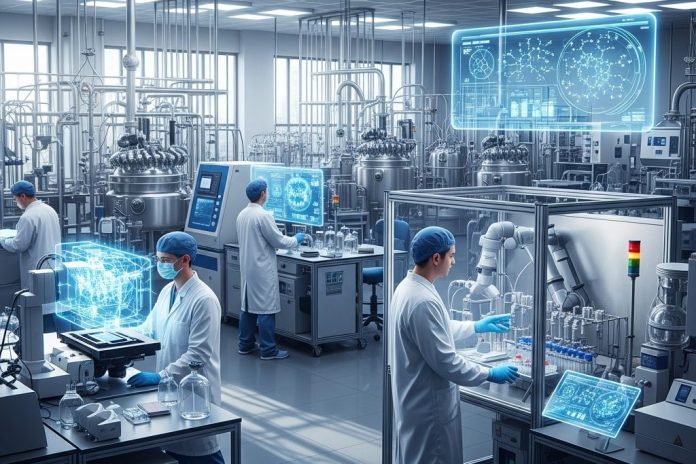
By 2026, China is completing its transformation from a global generics manufacturing site into a world-class biotechnology hub. Despite geopolitical tensions, leading pharmaceutical giants continue to increase their presence in the region, attracted by regulatory easing, human capital, and the sheer scale of the market.
Shifting Course: From Copying to Innovation
A key trend of the current period is the sharp rise in China’s research and development potential. Local manufacturers are pivoting from generics to innovative drugs—biotechnology already accounts for 40% of Chinese firms’ portfolios.
“China’s share of global R&D has reached 28%. Regulatory reforms and drug approval speeds are transforming the region from a sales market into a development hub.”
— Data: IQVIA
In 2026, the sector’s production output is expected to grow by 6.6%. Projections indicate that major Chinese exporters, such as Innovent and Hengrui, are set to enter the top 50 global pharmaceutical companies.
Big Pharma Investment Map (2024–2030)
Global players are implementing large-scale programs focusing on the localization of manufacturing and the development of complex therapies (oncology, cell therapy, radiopharmaceuticals).
| Company | Investment Volume | Key Focus and Projects |
|---|---|---|
| AstraZeneca | $15 bn (by 2030) | R&D in Beijing and Shanghai (cell therapy, ADCs); plants in Wuxi and Taizhou. Workforce: 17,000 employees. |
| Pfizer | $1 bn (5 years from 2024) | Development of the oncology center in Hangzhou (previously invested $350m) and myeloma partnerships. |
| Sanofi | €1 bn (cumulative) | Operation of 3 plants and 4 R&D centers; development of the Shanghai center. |
| Novo Nordisk | $556 m | Capacity expansion for diabetes and obesity treatments. |
| Roche | $420 m | Investments in manufacturing and R&D. |
| Novartis | $83 m | Radioligand manufacturing plant in Haiyan (near Shanghai). |
Growth Drivers: Why Investment Continues
Experts highlight three factors that outweigh political risks:
- Regulatory Environment: Legislative reforms are accelerating drug approvals, stimulating major deals. A prime example is the GSK agreement with Hengrui for $12 billion to license 11 drugs.
- Partnership Potential: 30% of all US pharma deals now involve Chinese partners (including WuXi Biologics and Mindray). Global players are actively acquiring CAR-T technologies and AI solutions.
- Infrastructure: A developed network of clinical bases remains a critical advantage for research speed.
“By 2030, China is expected to become a biopharma leader with a market volume of $127 billion. This compels global corporations to diversify assets, reducing reliance on US and European markets in favor of Asia.”
— Forecast: ZS Associates
Risks and Outlook
Investors are operating under conditions of high uncertainty. Geopolitical tensions and regulatory pressure remain high (including incidents involving the detention of top managers from Western companies). However, economic logic prevails: low costs and access to the domestic market are forcing companies to deepen integration rather than withdraw.