Researchers at South Ural State University (SUSU) have discovered a new class of compounds capable of selectively targeting anxiety disorders. The candidate molecule, selected using artificial intelligence, targets the SERT protein in the brain and, according to preliminary data, lacks the side effects associated with traditional tranquilizers.
Selection via “Digital Sieve”
The path to discovery began with computer modeling. Using bioinformatics and artificial intelligence, researchers analyzed a library of chemical compounds synthesized at the university. The goal was to find molecules capable of perfectly binding to the serotonin transporter (SERT), a key protein that regulates mood.
Aquarium Trials
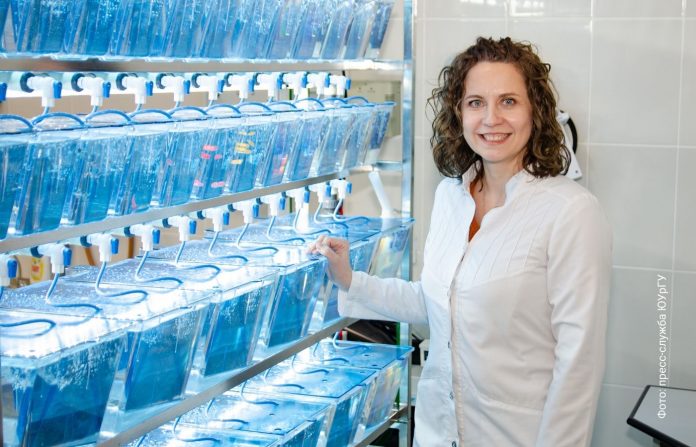
The best candidates underwent in vivo testing. In the first stage, efficacy was tested on Zebrafish (Danio rerio). Scientists created chronic stress conditions for the fish to verify the biological effects of the selected compounds.
“Under stress conditions, one of the compounds demonstrated clear anxiolytic (anti-anxiety) properties: ‘tense’ fish became calmer and showed more natural exploratory behavior under its influence. Essentially, out of dozens of virtual molecules, one leader emerged—a substance with a persistent anti-anxiety effect.”
— Maria Komelkova, Senior Researcher at SUSU Laboratory
Unexpected Selectivity
The next stage of testing was conducted on a unique line of laboratory mice genetically predisposed to depression. Test results (including the “elevated plus maze”) showed the drug’s high selectivity. Initially, researchers hoped to find a “two-in-one” universal remedy, but the molecule acted specifically.
The substance effectively suppressed anxiety states but had no effect on depression symptoms. Molecular analysis confirmed that the compound works exclusively via the “anxiety” pathway.
Advantages Over Analogs
The narrow specialization of the new molecule could become its main market advantage. Modern pharmacology faces two main issues in treating anxiety disorders:
- Benzodiazepines are effective but often cause drowsiness, addiction, and withdrawal syndrome.
- Antidepressants (SSRIs) take a long time to act and affect a wide range of bodily processes.
The Chelyabinsk development is theoretically free of these drawbacks. It acts in a targeted manner without causing sedation (drowsiness) and is believed not to induce dependence.
What’s Next?
Scientists now face the task of studying the pharmacokinetics in detail (how the substance is absorbed and eliminated from the body), as well as testing for reproductive toxicity and long-term effects. Successful completion of these stages will pave the way for clinical trials on humans.